AI-POWERED RESEARCH INTELLIGENCE

Finding therapies hidden in 1,516 Parkinson’s papers.

Neurocompute scores biomedical literature, surfaces overlooked patterns, and turns Parkinson’s research into a living discovery terminal.

1,516Papers indexed
984Papers AI scored
998Ranked papers
0.7%Coverage
LIVE RESEARCH INTELLIGENCE
↑ Narrative velocity rising ↑ New papers ingested ↑ Cross-paper convergence detected ↑ AI score dials updating ↑ Research blind spots surfacing
TOP SIGNALS TODAY

Ranked discovery teasers

View all discoveries →
RESEARCH TERMINAL

All ranked Parkinson’s papers

1516 results
D
Network-based Transcriptomic Profiling of Fetal Astrocyte Differentiation Reveals Therapeutic Targets for Neurodegenerative Disease.
PMID 41935371 Published: 2026-04-03 Ingested: 2026-04-28 08:58 PM Current molecular medicine
AI40.0
Base49.2
Rank46.3
AI Summary

This computational study compared fetal astrocytes to neural stem cells, identifying 359 DEGs and ten ECM/adhesion-related hub genes (e.g., COL1A1, LOX, CD44, TIMP1) with drug-gene links to compounds such as estradiol, retinoic acid, and calcitriol.

Why It Matters

Although not PD-specific, the paper highlights astrocyte-expressed extracellular matrix and adhesion targets that could be pharmacologically modulated or repurposed as starting points for astrocyte-centered neuroprotective strategies relevant to Parkinson's disease.

D
The mechanism of external cueing interventions in improving freezing of gait in Parkinson's disease: an fNIRS study.
PMID 41938069 Published: 2026-01-01 Ingested: 2026-04-28 08:58 PM Frontiers in aging neuroscience
AI40.0
Base49.2
Rank46.3
AI Summary

Using fNIRS in 28 PD-FOG patients and 28 controls, the study shows rhythmic visual or auditory cues (but not their combination) acutely improve gait, increase oxyhemoglobin in PFC and S1, and strengthen functional connectivity among PFC, S1, M1, PMC and temporal/visual areas.

Why It Matters

Findings clarify cortical hemodynamic and connectivity mechanisms by which external cueing alleviates freezing of gait, supporting non-pharmacological therapies and potential cortical targets/biomarkers for neuromodulation, but provide limited direct molecular targets for drug discovery.

D
Sedentary behavior modifies the effect of balance rehabilitation on balance discordance in Parkinson's disease.
PMID 41991542 Published: 2026-04-16 Ingested: 2026-04-28 08:58 PM NPJ Parkinson's disease
AI38.0
Base49.2
Rank46.3
AI Summary

Secondary analysis of two HiBalance trials (n=97) showed that overall balance training did not significantly change balance discordance in PD, but baseline sedentary behavior significantly modified post-intervention discordance in the clinical cohort.

Why It Matters

Although not addressing molecular targets, the result is clinically relevant for tailoring and stratifying rehabilitation interventions (and related trials) by sedentary behavior to better address perceived-versus-actual balance and potentially reduce fall risk.

D
AI38.0
Base49.2
Rank46.3
AI Summary

Italian national survey of 424 adults with motor, sensory, or cognitive disabilities (including Parkinson's) identifying rehabilitation priorities, limited access to robotic interventions (39% had used them), higher satisfaction with technology-based rehab—especially for mobility—and strong demand…

Why It Matters

Offers patient-centered evidence to inform pragmatic clinical trial design, outcome selection, and deployment strategies for robotic/home-based rehabilitation in Parkinson's care, but contains no mechanistic or direct therapeutic discovery insights.

D
Exploiting the Danio rerio model and bioinformatics to explore the effects and molecular networks of Parkinson's disease drugs in human melanoma.
PMID 42025245 Published: 2026-04-17 Ingested: 2026-04-28 08:58 PM European journal of cell biology
AI35.0
Base49.2
Rank46.3
AI Summary

Using zebrafish melanoma xenografts and bioinformatics, the authors evaluated Parkinson's drugs amantadine, rasagiline, and carbidopa, reporting LC50 values, limited anti‑melanoma efficacy (only dose‑dependent effects for amantadine), and molecular associations between PD and melanoma.

Why It Matters

While it offers limited direct insight into PD neuroprotective mechanisms, the paper provides in vivo safety/toxicity data, a zebrafish platform for repurposing screens, and bioinformatic links that could inform comorbidity studies or hypotheses for future repurposing efforts.

D
AI34.0
Base49.2
Rank46.3
AI Summary

A UK cross-sectional survey of 102 PD patients on opicapone or entacapone found that increased ON time and reduced OFF time were the most valued benefits, that hallucinations and dyskinesia were the least acceptable side effects, and that clinician communication and follow-up around COMT inhibitor…

Why It Matters

Although not mechanistic, these real-world patient-reported findings are useful for informing clinical prescribing, shared decision-making, prioritizing outcomes for trials of motor-fluctuation therapies, and improving implementation of adjunctive COMT inhibitor treatment.

D
Appropriate use recommendations for digital technology in cognitive telerehabilitation for people living with Parkinson's disease.
PMID 41987502 Published: 2026-04-15 Ingested: 2026-04-28 08:58 PM Disability and rehabilitation. Assistive technology
AI30.0
Base49.2
Rank46.3
AI Summary

This paper presents 16 consensus-based appropriate use recommendations for digital technology in cognitive telerehabilitation for people with Parkinson's disease, developed via SWOT analysis, workshops, and expert survey to address usability, safety, efficacy, and implementation.

Why It Matters

Although it provides little mechanistic or therapeutic discovery content, these practical guidelines can enhance implementation, patient access, and the design of remote cognitive intervention trials in PD, aiding clinical delivery and translational research readiness.

D
Effects of Cha-Cha dance training on fall-related physical performance and cognitive function in patients with Parkinson's disease: A feasibility study.
PMID 41990889 Published: 2026-04-15 Ingested: 2026-04-28 08:58 PM Complementary therapies in medicine
AI25.0
Base49.2
Rank46.3
AI Summary

A 12-week single-group pilot found Cha-Cha dance training improved balance and cognitive test scores in mild–moderate Parkinson’s patients but lacked a control group.

Why It Matters

Findings support a feasible, safe non-pharmacological intervention that may reduce fall risk and boost cognition—valuable for symptomatic management and justifying controlled trials, but of limited direct relevance to molecular therapeutic discovery.

D
Mental health support and psychotherapy in Parkinson's: from misalignments to meaningful interactions.
PMID 42003558 Published: 2026-04-20 Ingested: 2026-04-28 08:58 PM Aging & mental health
AI22.0
Base49.2
Rank46.3
AI Summary

Qualitative study of 28 people with Parkinson's characterizing barriers, shortcomings, helpful elements, and outcomes of professional psychological support and offering recommendations to optimize care.

Why It Matters

While not addressing molecular or disease-modifying targets, the findings are clinically relevant for improving mental health care delivery, quality of life, and potentially treatment adherence in Parkinson's patients, which can indirectly affect clinical outcomes.

D
Virtual reality as a therapeutic tool in modern healthcare.
PMID 41920719 Published: 2026-01-01 Ingested: 2026-04-28 08:58 PM Casopis lekaru ceskych
AI22.0
Base49.2
Rank46.3
AI Summary

This review describes virtual reality's growing use across medicine and notes some beneficial but methodologically limited evidence for motor rehabilitation and symptom management in Parkinson's disease.

Why It Matters

VR is valuable for symptomatic rehabilitation, objective outcome measurement, and potential digital biomarkers in PD trials, but it offers minimal actionable molecular or target-based insights for Parkinson's therapeutic discovery.

D
AI15.0
Base49.2
Rank46.3
AI Summary

A large RCT in older adults showed the online Rethink My Drink program produced durable reductions in monthly alcohol consumption at 12 months but did not change global cognition.

Why It Matters

This trial is clinically useful for reducing alcohol-related brain health risks in older adults but has limited direct value for Parkinson's therapeutic discovery because it excludes PD patients and provides no mechanistic, biomarker, or targetable insights relevant to PD pathogenesis or drug…

D
Conditional Modeling of GNAO1 Disorder Dissociates Circuit Specific Contributions to Pathology and Rationalizes Ameliorative Strategies.
PMID 41902602 Published: 2026-03-28 Ingested: 2026-04-28 08:58 PM Movement disorders : official journal of the Movement Disorder Society
AI58.0
Base47.6
Rank45.0
AI Summary

Conditional knock-in mice expressing the dominant-negative GNAO1 G203R mutation in specific circuits reveal striatal and forebrain contributions to seizures and motor deficits, region-specific synaptic and proteomic alterations, and that caffeine treatment rescues motor abnormalities.

Why It Matters

Though focused on pediatric GNAO1 encephalopathy, the study provides circuit-specific dissection of G protein signaling, molecular biomarkers, and a repurposed intervention (caffeine), offering experimental strategies and translational leads that could inform Parkinson's motor-circuit targeting and…

D
Dysregulation of astrocytic DNAJC6 contributes to sporadic Parkinson's disease pathogenesis.
PMID 41955024 Published: 2026-04-09 Ingested: 2026-04-28 08:58 PM The Journal of clinical investigation
AI88.0
Base47.3
Rank44.7
AI Summary

The paper shows DNAJC6 is downregulated in neurons and astrocytes in sporadic PD, links that loss to impaired autolysosomal, mitochondrial, phagocytic function and pro-inflammatory astrocyte phenotypes via NURR1/FOXA2 and LRRK2-related mechanisms, and demonstrates that CRISPRa-AAV9–mediated…

Why It Matters

Identifies DNAJC6 as a disease-modifying target that connects key PD pathways (α-synuclein, lysosomes, mitochondria, inflammation, LRRK2) and validates a translational intervention (AAV-CRISPRa) with cell-type specificity, making it highly relevant for therapeutic development and biomarker efforts.

D
Large-scale bidirectional arrayed genetic screens identify OXR1 and EMC4 as modifiers of αSynuclein aggregation.
PMID 41911287 Published: 2026-03-30 Ingested: 2026-04-28 08:58 PM FEBS open bio
AI80.0
Base47.3
Rank44.7
AI Summary

Arrayed CRISPR activation and knockout screens of ~4,700 mitochondria/trafficking genes identified OXR1 activation as promoting Ser129-phosphorylated α-synuclein aggregation via mitochondrial dysfunction and EMC4 ablation as reducing aggregation by enhancing ER-driven autophagic/lysosomal…

Why It Matters

Provides actionable, validated targets—EMC4 for enhancing ER-autophagy to broadly lower α-syn aggregation and OXR1/mitochondrial pathways as modulators of polymorph-specific aggregation—making these high-priority leads for Parkinson’s therapeutic discovery and target development.

D
LINC-EPS Protects Against Neurodegeneration by Driving a PGC-1α-Mediated Anti-Ferroptosis Program in Parkinson's Disease.
PMID 42003904 Published: 2026-01-01 Ingested: 2026-04-28 08:58 PM International journal of biological sciences
AI80.0
Base47.3
Rank44.7
AI Summary

This study shows LINC-EPS is reduced in PD patient blood and models, and that LINC-EPS protects dopaminergic neurons by scaffolding PGC-1α to its promoter to boost PGC-1α transcription, improving mitochondrial function and preventing ferroptosis, with AAV-mediated LINC-EPS and the PGC-1α activator…

Why It Matters

Provides a blood-correlated biomarker and a mechanistic, druggable LINC-EPS→PGC-1α anti-ferroptosis axis that supports translational strategies (gene therapy/lncRNA modulation or PGC-1α activation/repurposing) for disease-modifying PD interventions.

D
Synergistic Neurotoxicity of environmental Cadmium and Paraquat in Parkinsonism: Unveiling the Mito-ROS/OPA1/Caspase-3/GSDME-driven Apoptosis Axis.
PMID 41943846 Published: 2026-01-01 Ingested: 2026-04-28 08:58 PM International journal of biological sciences
AI76.0
Base47.3
Rank44.7
AI Summary

The study shows that chronic low-dose co-exposure to cadmium and paraquat drives mito-ROS–dependent OPA1 dysregulation, mitochondrial fragmentation, caspase-3–mediated GSDME cleavage, and dopaminergic neuron loss producing PD-like motor and cognitive deficits in mice.

Why It Matters

By linking mitochondrial ROS and OPA1-dependent dynamics to caspase-3/GSDME-driven neuronal apoptosis with in vivo dopaminergic loss, the work identifies actionable targets (mito-ROS, OPA1, caspase-3/GSDME) and an environmental etiologic axis that can inform antioxidant, mitochondrial-dynamics, or…

D
Blood mtDNA markers of mitochondrial subtype and early-onset Parkinson's disease biology.
PMID 41992946 Published: 2026-04-16 Ingested: 2026-04-28 08:58 PM Brain : a journal of neurology
AI75.0
Base47.3
Rank44.7
AI Summary

The paper shows that blood and CSF mtDNA integrity measures (major-arc deletions, 7S DNA abundance, and copy number) are altered in PINK1/PRKN and early-onset idiopathic PD, detectable in prodromal converters, associated with clinical outcomes, and substantially improve group discrimination when…

Why It Matters

These minimally invasive, mechanism-linked mtDNA biomarkers can help stratify patients by mitochondrial involvement and enrich/monitor cohorts for mitochondrial-targeted interventions, increasing translational and trial-readiness value despite limited standalone diagnostic accuracy.

D
Lysosome-Acidifying Nanoparticles Rescue A30P α-Synuclein Induced Neuronal Death in Cellular and Drosophila Models of Parkinson's Disease.
PMID 42033266 Published: 2026-04-25 Ingested: 2026-04-28 08:58 PM Advanced healthcare materials
AI72.0
Base47.3
Rank44.7
AI Summary

The authors developed biodegradable lysosome-acidifying polymeric nanoparticles (AcNPs) that restore lysosomal pH, enhance autophagic clearance of A30P α‑synuclein, improve mitochondrial function, and rescue neuronal loss and motor deficits in cell and Drosophila PD models.

Why It Matters

This provides a mechanistically grounded, actionable proof-of-concept that targeted lysosomal re-acidification can reduce pathogenic α‑synuclein and neurodegeneration, highlighting a novel therapeutic strategy warranting advancement to mammalian models and translational development.

D
Blood-based biomarkers of ferroptosis in Parkinson's disease.
PMID 42035924 Published: 2026-04-24 Ingested: 2026-04-28 08:58 PM Neurobiology of disease
AI72.0
Base47.3
Rank44.7
AI Summary

In a multicenter cohort of 598 PD patients, blood ferroptosis markers—particularly 4-HNE—along with ferritin, selenium and ACSL4 SNPs correlated with baseline disability and one-year motor progression, supporting a link between ferroptosis and disease worsening.

Why It Matters

Provides clinically accessible biomarkers and genetic evidence implicating ferroptosis in PD progression, offering a translational path to stratify patients for trials of ferroptosis-modulating therapies and for targeted repurposing (e.g., iron chelators or ferroptosis inhibitors).

D
Predicting CSF α-Synuclein Seed Amplification Assay Status From Demographics and Clinical Data.
PMID 41982814 Published: 2025-06-01 Ingested: 2026-04-28 08:58 PM Neurology open access
AI70.0
Base47.3
Rank44.7
AI Summary

This study builds and externally validates logistic models using easily obtainable clinical variables (UPSIT smell percentiles, constipation, sex, and LRRK2/GBA status) to accurately predict CSF alpha-synuclein SAA positivity in PD-enriched cohorts (AUROC 0.92–0.98).

Why It Matters

Provides a non-invasive, pragmatic approach to infer alpha-synuclein pathology that can help enrich and triage participants for biomarker-driven trials and reduce reliance on CSF sampling, aiding therapeutic development and patient stratification.

Previous
Page 18 of 76
Next
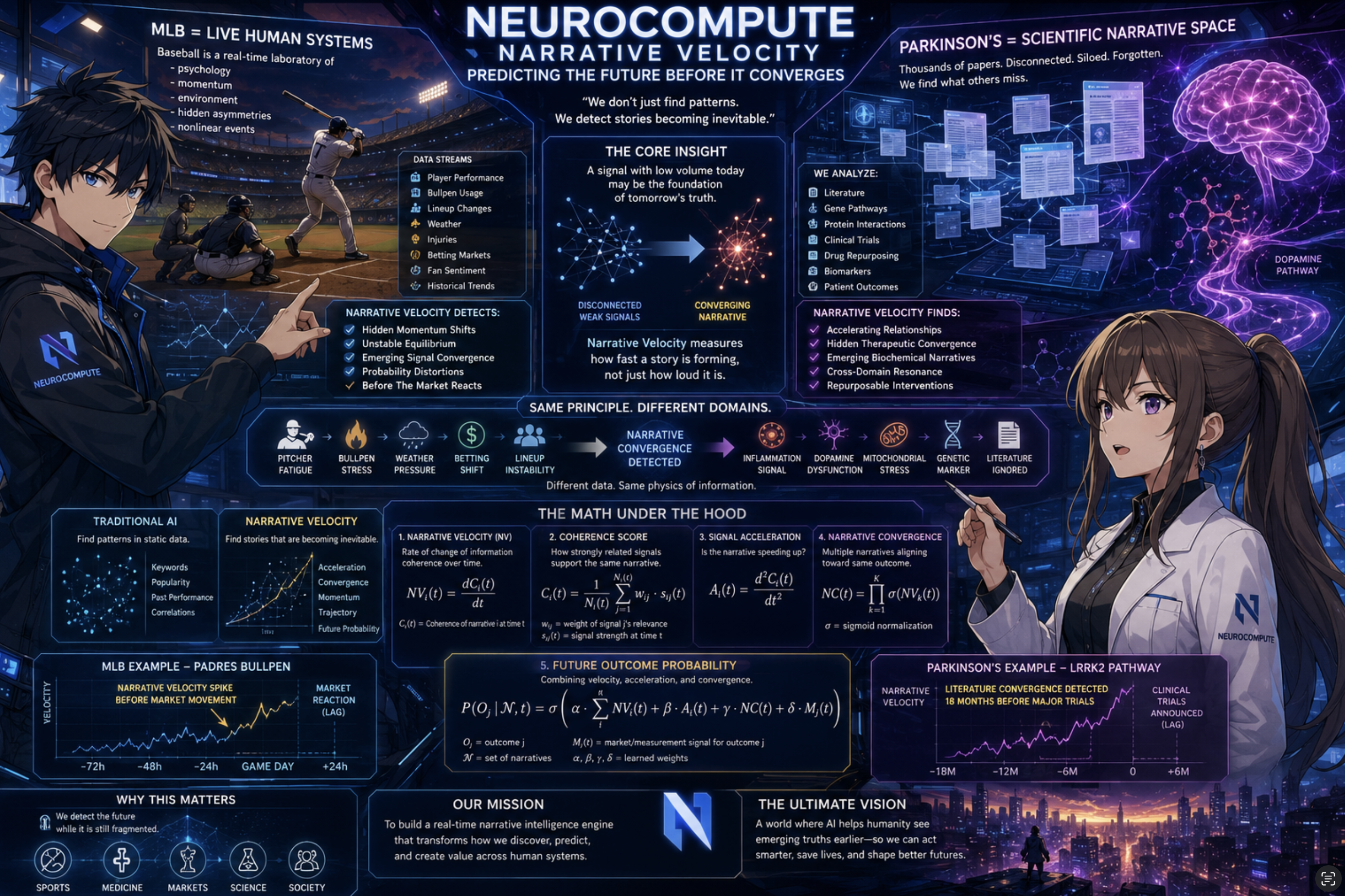
Neurocompute Parkinson’s Narrative Velocity Infographic
NEUROCOMPUTE VISUAL SYSTEM

Open the Narrative Velocity Map

Explore the full Parkinson’s research intelligence diagram.

Expand Intelligence View →
Full Neurocompute Infographic