E grade · PMID 41894517
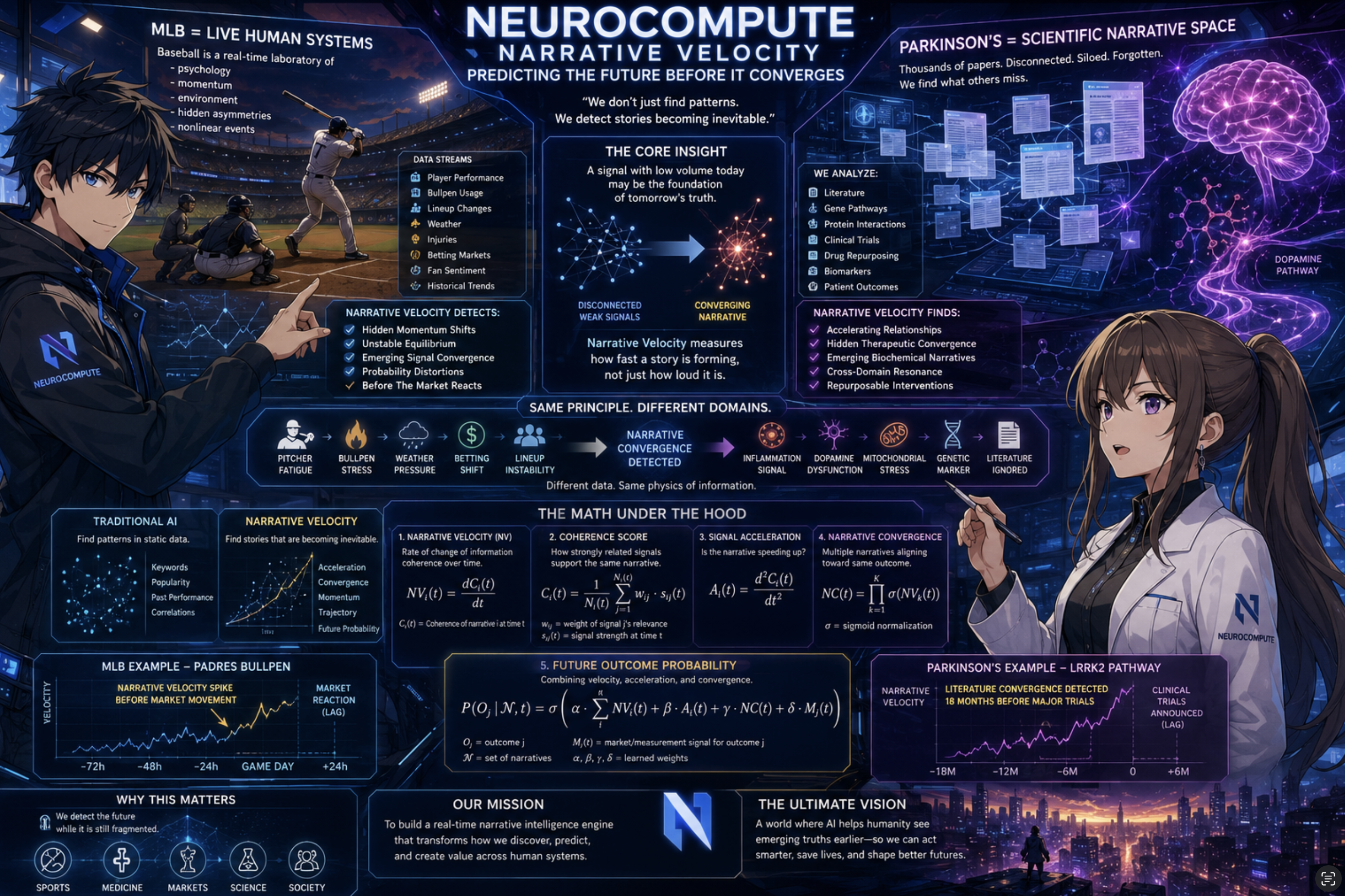
View analysis →Finding therapies hidden in 1,516 Parkinson’s papers.
Neurocompute scores biomedical literature, surfaces overlooked patterns, and turns Parkinson’s research into a living discovery terminal.
Ranked discovery teasers
E grade · PMID 41982821
View analysis →E grade · PMID 42028153
View analysis →E grade · PMID 41990983
View analysis →E grade · PMID 41960765
View analysis →E grade · PMID 42003207
View analysis →E grade · PMID 42039388
View analysis →E grade · PMID 41895855
View analysis →E grade · PMID 41930763
View analysis →E grade · PMID 41992310
View analysis →Database feed
All ranked Parkinson’s papers
This is an erratum for a study reporting that the Parkinson's-linked VPS35[D620N] mutation drives LRRK2-dependent lysosomal recruitment of RILPL1 and TMEM55B.
While the erratum itself adds no new data, the corrected study ties retromer (VPS35) dysfunction to LRRK2-regulated lysosomal processes—mechanistically relevant to LRRK2-targeted therapies and lysosome/retromer-focused approaches in PD.
This study compared Cochrane risk-of-bias ratings assigned to conference abstracts versus subsequent full-text reports across 52 RCTs and found many abstracts were rated 'unclear' and that full texts more often led to higher or lower risk judgments—notably increased odds of higher risk for…
For Parkinson's therapeutic research, reliance on conference abstracts can mischaracterize trial quality and certainty of evidence, potentially skewing interpretation of intervention efficacy and priorities for follow-up studies or drug development.
Using cryo-EM, X-ray crystallography, and biochemical perturbations, the paper reveals that monomeric full-length LRRK2 adopts three intrinsic conformations (autoinhibited, intermediate, activated) and that ROC GTPase switch-region plasticity—specifically coupling between R1441 and switch…
High-resolution mechanistic and structural mapping of ROC-dependent activation identifies specific allosteric nodes (switch regions and R1441 coupling) that are actionable targets for rational design of modulators to normalize aberrant LRRK2 activity in Parkinson's disease.
CRISPR-Cas9 ablation of PARK7/DJ-1 in SH-SY5Y cells produced ~5,468 differentially expressed genes with downregulation of synaptic transmission pathways and network analysis nominating REST and EP300 as top upstream regulators.
The work maps DJ-1–dependent gene networks and highlights potentially druggable transcriptional regulators (REST, EP300) and synaptic pathways relevant to PD, offering moderate translational leads but limited by an in vitro SH-SY5Y model and minimal functional validation.
This study identifies a 10 mL white-matter reference region for [11C]UCB-J PET that lowers test-retest variability and yields larger effect sizes for detecting reduced synaptic density in substantia nigra and caudate in Parkinson's disease versus controls.
Improved quantification and sensitivity make [11C]UCB-J a more reliable synaptic-density biomarker for patient selection, longitudinal monitoring, and assessing target engagement or efficacy in PD therapeutic trials.
This paper presents the GP2 Genome Browser, an open-access resource harmonizing 31,665 WGS and 9,559 CES samples across 11 ancestries with >300 million variants, providing ancestry-stratified allele frequencies and functional annotations for PD variant interpretation.
By delivering a large, ancestry-aware, and uniformly processed PD genomic dataset with convenient variant- and gene-level summaries, the browser materially accelerates identification and prioritization of risk and causal variants for target nomination, cohort stratification, and biomarker…
Proteomic analyses in cells and rodent models show the PD-linked VPS35 D620N mutation produces subtle, brain-selective changes in the VPS35 interactome, notably reduced binding to WASH complex components and the interactors TBC1D5 and VPS29.
By pinpointing specific retromer interaction losses, the study highlights mechanistic targets (retromer/TBC1D5/VPS29) for strategies to restore endosomal sorting in VPS35-linked PD, though it does not yet provide direct therapeutic leads.
Pilot study (n=15) found that wrist vibration increased presynaptic inhibition of the soleus and reduced abnormal anticipatory postural adjustments during step initiation in people with Parkinson's disease and freezing of gait.
Provides proof-of-concept that a non-invasive peripheral vibrotactile stimulus can acutely modulate spinal and supraspinal sensorimotor circuits to reduce freezing-related gait abnormalities, supporting development of wearable symptomatic therapies and further clinical testing.
Mendelian randomization analysis implicates several cathepsin isoforms—most notably cathepsin F—as inversely associated with Parkinson's disease risk, while other isoforms show links to Alzheimer's and epilepsy, but many associations rely on few SNP instruments and European-only data.
Highlights lysosomal cathepsins (especially cathepsin F) as plausible causal contributors and potential biomarker/therapeutic targets for PD, providing a genetically informed rationale for follow-up functional studies and target validation despite requiring replication.
This randomized yoked-controlled study found that self-controlled feedback during a finger-press trajectory task improved 7-day motor retention and was associated with increased corticomotor excitability in people with Parkinson disease compared with yoked feedback.
The paper identifies a simple, implementable rehabilitation strategy that enhances motor learning and a neurophysiological marker of plasticity in PD, offering actionable guidance for clinical therapy design though it does not address disease-modifying mechanisms.
Using lumbar accelerometer data from the DeFoG dataset, the authors show that a frequency-domain FoG-ratio and time-domain RMS reliably distinguish baseline, pre-FoG, FoG, and post-FoG windows during turning and walking, with AP FoG-ratio correlating with reported freezing severity.
Delivers objective, event-level sensor biomarkers that can improve phase-aware FoG detection, remote monitoring, patient stratification, and outcome measurement for symptomatic/cueing interventions, though it offers little direct insight into disease-modifying biology.
Using multiparametric MRI in 486 healthy adults, the study maps age-related structural, diffusion, and hemodynamic alterations across nigrostriatal nuclei and tract, and derives a composite nigrostriatal aging index (NAI) that rises after age 60 and correlates with motor and cognitive decline.
Offers a noninvasive imaging biomarker (NAI) to detect early nigrostriatal vulnerability and stratify/monitor at-risk older adults for PD-related research and trials, though it lacks direct molecular therapeutic targets.
This human study demonstrates distinct, time-dependent motor cortex interneuron plasticity in Parkinson's disease measured with direction-specific TMS/PAS and links PA-sensitive plasticity to rostral middle frontal gyrus volume while AP-sensitive plasticity relates to baseline excitability and age.
The work provides potential biomarkers and mechanistic guidance for stratifying patients and optimizing non‑invasive neuromodulation (TMS/PAS) therapies in PD, though it does not identify molecular drug targets for pharmacological discovery.
This study uses a multimodal VR platform (BioVRSea) synchronized with EEG to show that PD patients exhibit challenge-dependent increases in delta-theta and alpha-beta spectral power during postural perturbations versus controls, indicating impaired sensorimotor integration.
Offers a translational, ecologically valid EEG biomarker method to detect and quantify PD-related postural control dysfunction for diagnosis, stratification, and treatment monitoring, though it lacks direct mechanistic or therapeutic targets.
Cross-sectional wearable study of 80 people with Parkinson's found higher daily step counts were associated with lower bradykinesia and higher mild dyskinesia using Parkinson KinetiGraph-derived scores.
Demonstrates that objective, real-world wearable metrics can function as digital biomarkers to monitor motor symptom severity and support trial/outcome measurement, but provides minimal mechanistic or direct therapeutic-discovery insights.
This methods study benchmarks common effective connectivity metrics on simulated time-delayed networks and finds multivariate transfer entropy most accurate but computationally intensive, while zero-lag metrics fail for time-lagged interactions and simpler metrics (Granger causality, mutual…
Reliable EC metric selection for noisy, sparsely sampled human electrophysiology improves reconstruction of directed brain networks, which is a necessary step toward robust electrophysiology-based biomarkers and circuit-targeted therapies (e.g., DBS optimization) in Parkinson's disease.
Protocol to validate CuePD, a smartphone-based system that measures gait via inertial sensors and delivers personalised auditory cues (metronome, instrumental and vocal music) to retrain gait and assess acceptability and individual responses in people with Parkinson's disease.
Provides a scalable, personalised symptomatic intervention aimed at improving gait and reducing falls in Parkinson's, with clear translational potential for rehabilitation and trial design despite not addressing disease-modifying mechanisms.
The paper shows full-length Tau binds to and perturbs phosphatidylcholine-containing supported lipid bilayers when membrane fluidity is high, without adopting a misfolded structure.
Highlights membrane physical state—specifically lipid fluidity—as a modulator of Tau–membrane interactions, pointing to lipid composition or membrane-stabilizing strategies as a potential, though indirect, avenue for modulating tau-related pathology relevant to Parkinson's research.
This small feasibility study shows people with Parkinson's disease can safely tolerate repeated high‑intensity treadmill-induced standing-slips and rapidly improve dynamic gait stability, limb support, and recovery-step metrics across trials.
While not addressing molecular or drug targets, the paper provides actionable translational evidence that perturbation-based balance training is feasible and adaptive in PD and therefore a promising non-pharmacologic intervention to test in clinical trials to reduce fall risk.
This multi-site study found group-specific associations between cognitive domains—especially executive function—and quantitative postural sway across sensory standing conditions in people with Parkinson’s disease, older adults, and younger adults, with better executive function unexpectedly linked…
Although it does not identify molecular or druggable targets, the study has translational value for PD by linking cognition to fall-risk phenotypes and supporting sensor-based monitoring and cognitive/rehabilitative interventions to mitigate postural instability.