1
Why does FND mainly affect women? A consideration of gender imbalance in neuropsychiatric disease.
7.0
AI
E grade · PMID 41969052
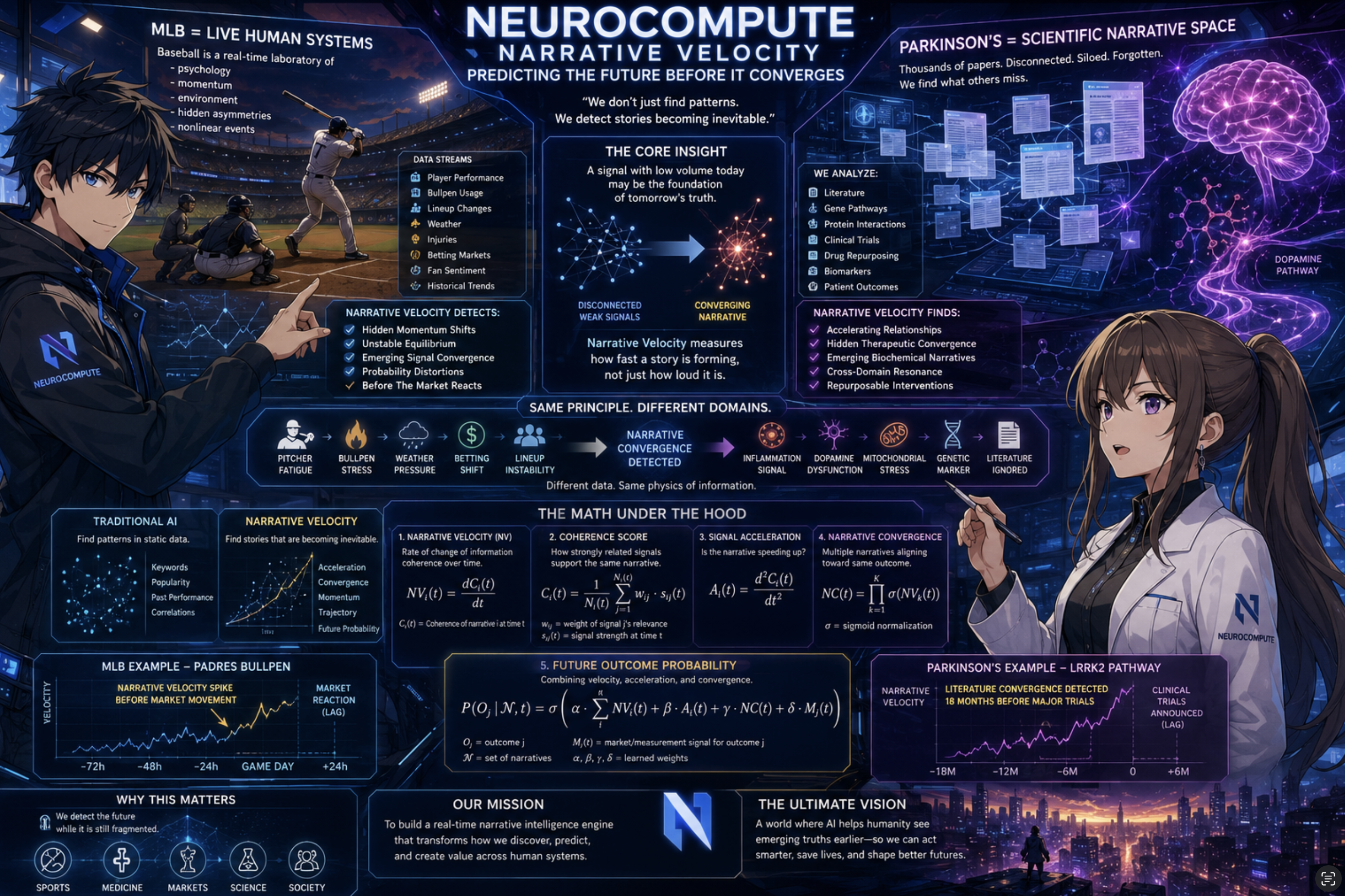
View analysis →Neurocompute scores biomedical literature, surfaces overlooked patterns, and turns Parkinson’s research into a living discovery terminal.
E grade · PMID 41969052
View analysis →E grade · PMID 41909339
View analysis →E grade · PMID 41922829
View analysis →E grade · PMID 41894064
View analysis →E grade · PMID 41995464
View analysis →E grade · PMID 41965949
View analysis →E grade · PMID 41988013
View analysis →E grade · PMID 41937418
View analysis →E grade · PMID 41909919
View analysis →E grade · PMID 41935042
View analysis →Narrative review analyzing the roughly 3:1 female predominance in functional neurological disorder by synthesizing biological (notably sex hormones), psychological (trauma, dissociation), and social (gender norms, socioeconomic) contributors and diagnostic biases.
Limited direct value for Parkinson's therapeutic discovery, but the paper highlights sex/gender, hormonal, and psychosocial factors that are important to consider in neurodegeneration research, trial design, and understanding comorbid neuropsychiatric presentations.
A single-case report of an older woman with Parkinson's disease who developed unexplained hypothermia and altered consciousness that resolved with supportive rewarming and did not recur over two years.
Alerts clinicians to a rare, reversible thermoregulatory/autonomic complication of PD but provides minimal mechanistic or therapeutic information useful for Parkinson's drug discovery.
This systematic review and meta-analysis synthesizes clinical and biomarker evidence indicating that neuroinflammation is a significant contributor to Parkinson's disease pathogenesis.
By aggregating human clinical and biomarker data, it helps prioritize inflammatory pathways and measurable biomarkers that could be targeted or used for patient stratification in PD therapeutic development.
A bibliometric analysis of 12,564 papers (2014–2024) mapping the rapid growth, key countries/institutions/sources, and dominant themes (deep learning, MRI) including applications to diagnosis of Parkinson's, Alzheimer's, and MCI.
Helps researchers navigate the neuroimaging–AI landscape to find datasets, methods, and collaborators for imaging-based biomarkers or diagnostic ML for Parkinson's, but offers little mechanistic or therapeutic actionable insight.
Systematic review and meta-analysis of 33 studies (over 1.2 million people) identifying factors associated with hospital vs non‑hospital death in Parkinson's disease—hospital death was more likely in men, married people, those under 85, with suggestive higher odds in non‑white groups and lower odds…
Useful for informing end‑of‑life care planning, service provision, and targeted palliative interventions but of limited direct value for Parkinson's therapeutic discovery because it lacks mechanistic, biomarker, or intervention development insights.
Cross-sectional analysis of NHANES data (1999–2018) found that higher intake of monounsaturated and polyunsaturated fatty acids—especially docosahexaenoic acid (DHA, C22:6)—was associated with lower odds of prevalent Parkinson's disease, while several medium-chain saturated fatty acids (C6:0–C14:0)…
The study highlights dietary fatty acid composition, particularly DHA, as a potentially modifiable factor and prioritizes specific lipids for mechanistic, prospective, or interventional PD research, though causality remains unproven due to the cross-sectional design.
Spirulina maxima-derived small extracellular vesicles containing PARK7 (DJ-1) and HSP70 reduce TGF-β/PDGF-driven mesothelial/fibroblast activation and ameliorate peritoneal fibrosis in cell assays and a mouse model.
While the study is peripheral and not in a neurodegeneration model, detection of PD-linked chaperones (PARK7, HSP70) in bioactive EVs raises a plausible, but unproven, avenue for EV-mediated delivery of neuroprotective factors or modulation of proteostasis relevant to Parkinson's disease, meriting…
Scoping review of 25 studies (5,531 participants) documenting 38 FXTAS cases and 386 FMR1 premutation carriers in Latin America, summarizing clinical, neuroimaging, and diagnostic features and emphasizing underdiagnosis and the need for improved genetic testing and prospective studies.
Low direct value for Parkinson's therapeutic discovery—although some premutation carriers exhibit parkinsonism, the review is descriptive and regional with no mechanistic insights, biomarkers, or intervention targets that would readily inform PD drug development.
Systematic review assessing clinimetric properties of 71 clinical outcome assessments for functional performance in spastic paresis, recommending specific lower-limb gait tests (10‑m walk variants, 2‑ or 6‑minute walk, Wisconsin Gait Scale) and rating two upper‑limb scales as 'recommended with…
Offers validated functional outcome measures that could inform endpoint selection in movement-disorder trials (including gait/fatigue assessments relevant to Parkinson's studies), but provides little direct mechanistic or therapeutic insight for PD drug discovery.
This review synthesizes genetic and experimental evidence that loss-of-function variants in DNAJC6 (auxilin) impair clathrin-mediated endocytosis, endolysosomal trafficking, autophagy, and lipid homeostasis, leading to dopaminergic neuron loss and implicating oligodendrocytes in PD.
By connecting a Mendelian PD gene to endolysosomal/autophagy dysfunction and glial contributions, the paper identifies mechanistic pathways that are actionable for therapeutic targeting, biomarker development, and gene-based strategies.
This broad review summarizes evidence that vagus nerve stimulation (VNS) can provide neuromodulatory, anti-inflammatory, and neuroprotective effects across neurodegenerative diseases including Parkinson's, and discusses its mechanisms and clinical applications.
VNS targets the gut–brain axis and inflammation—mechanisms relevant to PD that offer a minimally invasive, translational therapeutic approach—but the paper is a high-level review with limited PD-specific, actionable targets or experimental data.
A clinical review of lower urinary tract and sexual dysfunction across neurological diseases that summarizes anatomy, pathophysiology, and management approaches and includes Parkinson disease among other disorders but focuses on clinical presentation and symptomatic treatment rather than molecular…
Useful for improving symptomatic care, patient stratification, and awareness of autonomic dysfunction as a clinical feature in PD, but offers limited actionable insight for discovery of disease-modifying Parkinson's therapeutics.
Introduces a hybrid pipeline combining random-forest feature selection with fuzzy c-means clustering and selective manual review to classify MER signals into zona incerta, STN, and substantia nigra with ~92.7% accuracy while reducing manual labeling to ~10%.
By enabling fast, scalable, and accurate intraoperative identification of DBS target nuclei, this method can improve surgical targeting and efficiency—potentially enhancing clinical outcomes and facilitating wider deployment of DBS—though it does not directly inform molecular mechanisms or novel…
Meta-analysis shows PD-MCI patients have significant atrophy in hippocampus, thalamus, putamen, amygdala and right-lateralized globus pallidus compared with cognitively normal PD, while caudate volumes are preserved.
Identifies a reproducible subcortical imaging signature that could serve as a biomarker for early cognitive decline and trial enrichment in PD, but offers limited direct mechanistic or therapeutic leads for drug discovery.
Retrospective Neurological Foundation Human Brain Bank series detailing clinicopathological heterogeneity of primary tauopathies (PSP, CBD, PART, AGD, genetic FTD), low clinicopathologic concordance, and availability of fixed/frozen tissue and clinical data.
Offers a valuable, well-characterized tissue and clinical dataset that can aid biomarker development and patient stratification for atypical parkinsonian syndromes, but provides limited direct mechanistic or therapeutic leads for classical alpha-synuclein Parkinson's disease.
A narrative review for spine clinicians describing clinical clues and diagnostic tools to distinguish neurologic disorders (including Parkinson's disease) from degenerative spinal conditions to avoid misdiagnosis and unnecessary surgery.
While it offers important clinical guidance for diagnosis and referral, the paper provides minimal mechanistic or therapeutic insight for Parkinson's drug discovery, so its direct value to PD therapeutics is limited but relevant for clinical pathway optimization.
This study shows plasma pTau217 predicts accelerated cognitive and functional decline and a three-fold higher risk of progression to MCI/dementia in Lewy body disease, supporting its use as a prognostic and monitoring biomarker.
A blood-based tau measure that identifies Alzheimer co-pathology in LBD enables better patient stratification and longitudinal monitoring for clinical trials and practice, improving chances to test and target therapies in biologically defined subgroups even though it does not itself propose a…
The study demonstrates that deep-learning image reconstruction combined with dynamic parallel transmission at 7T substantially shortens scan time while improving image quality, motion robustness, and delineation of DBS targets (STN, GPi, DRT) in patients.
Enhanced high-field imaging that yields clearer, faster, and safer visualization of subcortical targets has direct translational value for Parkinson's DBS planning and may improve surgical accuracy and outcomes, though it does not introduce new disease-modifying biology.
Resting-state EEG measures—lower dominant frequency, reduced alpha prevalence (DFP-alpha), and lower individual alpha peak frequency—distinguish Lewy body disease patients with cognitive fluctuations from those without, with anterior DFP-alpha yielding an AUC ≈0.85.
This identifies a noninvasive, readily obtainable biomarker for detecting and stratifying cognitive fluctuations in Lewy body disease, aiding diagnosis and clinical trial enrichment, though it offers limited direct mechanistic or therapeutic targets.
A broad systematic review and meta-analysis assessing the effects of physical exercise on cognitive impairment across Alzheimer's disease, Parkinson's disease, and mild cognitive impairment, but with no abstract provided and limited disease-specific mechanistic detail.
Offers clinical-level support for exercise as a non-pharmacological, potentially neuroprotective intervention relevant to PD symptoms and cognitive decline, but it provides limited actionable molecular targets or therapeutic-discovery insights.