AI-POWERED RESEARCH INTELLIGENCE

Finding therapies hidden in 1,516 Parkinson’s papers.

Neurocompute scores biomedical literature, surfaces overlooked patterns, and turns Parkinson’s research into a living discovery terminal.

1,516Papers indexed
984Papers AI scored
998Ranked papers
0.7%Coverage
LIVE RESEARCH INTELLIGENCE
↑ Narrative velocity rising ↑ New papers ingested ↑ Cross-paper convergence detected ↑ AI score dials updating ↑ Research blind spots surfacing
TOP SIGNALS TODAY

Ranked discovery teasers

View all discoveries →
RESEARCH TERMINAL

All ranked Parkinson’s papers

1516 results
E
From Bio-Interface Materials to Neural Integration: The Next-Generation Brain-Machine Interfaces Powered by Hydrogels.
PMID 42021568 Published: 2026-04-22 Ingested: 2026-04-28 08:58 PM Advanced materials (Deerfield Beach, Fla.)
AI45.0
Base23.4
Rank22.9
AI Summary

Comprehensive review of hydrogel-based brain–machine interface materials, design, and integration strategies emphasizing their mechanical, electrical, and biocompatible properties and discussing invasive/noninvasive systems, clinical translation, and applications including Parkinson’s disease.

Why It Matters

Hydrogel-enabled BMIs promise more compliant, long-lasting neural recording and stimulation interfaces that could reduce inflammation and enable reliable chronic sensing and closed-loop neuromodulation important for advancing Parkinson’s diagnostics and therapies.

AI Summary

Protocol for a randomized feasibility study comparing computational, patient-specific STN-DBS programming based on anatomy and structural connectivity to conventional monopolar review programming in Parkinson's disease.

Why It Matters

This work is clinically translational: if safe and practical, connectivity-guided individualized programming could shorten time-to-optimal DBS settings and reduce stimulation side effects, improving therapeutic delivery though it does not target underlying disease mechanisms.

E
Sleep depth and cognitive function in Parkinson's disease: An analysis using the Odd's Ratio Product (ORP).
PMID 41962180 Published: 2026-04-08 Ingested: 2026-04-28 08:58 PM Sleep medicine
AI42.0
Base23.4
Rank22.9
AI Summary

This polysomnography study shows that ORP measures of sleep depth—particularly the overnight change in ORP (ORPdiff)—differ between PD and OSA groups and that smaller ORPdiff (less restorative sleep) is associated with worse cognition and greater non-motor symptoms in Parkinson's disease.

Why It Matters

Suggests ORP-derived sleep-depth metrics could serve as objective biomarkers of cognitive vulnerability and non-motor burden in PD and highlights sleep restoration as a potentially modifiable target for therapeutic strategies, although causal mechanisms and intervention data are lacking.

E
Long-Term Outcomes of Subthalamic Nucleus and Globus Pallidus Interna Deep Brain Stimulation for Young-Onset Parkinson Disease.
PMID 41908734 Published: 2026-06-01 Ingested: 2026-04-28 08:58 PM Neurology. Clinical practice
AI40.0
Base23.4
Rank22.9
AI Summary

Large retrospective cohort (n=405) of young-onset Parkinson disease patients shows both GPi and STN deep brain stimulation improve motor symptoms at 1 and 5 years; STN produced greater medication reduction and modest motor benefit while GPi better reduced dyskinesia and motor fluctuations.

Why It Matters

This study informs clinical decision-making about DBS target selection in young-onset PD with actionable, long-term outcome data, but it offers limited mechanistic or drug-discovery insights relevant to molecular therapeutic development.

E
Widespread hnRNP K Mislocalisation Suggests Differential Neuronal Vulnerability in the Neurodegenerative and Ageing Human Brain.
PMID 41952419 Published: 2026-04-01 Ingested: 2026-04-28 08:58 PM Neuropathology and applied neurobiology
AI40.0
Base23.4
Rank22.9
AI Summary

This immunohistochemical study reports widespread neuronal mislocalisation (nuclear loss and cytoplasmic aggregation) of the RNA-binding protein hnRNP K across multiple brain regions in neurodegenerative diseases and aging, with prominent involvement of basal ganglia and a significant correlation…

Why It Matters

Points to hnRNP K mislocalisation as a potential mechanistic contributor or biomarker linked to motor dysfunction in Parkinson’s and related disorders, highlighting a novel RNA-processing–related target for validation and region-specific therapeutic investigation, though findings are exploratory…

E
Freezing of Gait in Parkinson's Disease: A Scoping Review on the Path Towards Real-Time Therapies.
PMID 41977827 Published: 2026-03-25 Ingested: 2026-04-28 08:58 PM Sensors (Basel, Switzerland)
AI40.0
Base23.4
Rank22.9
AI Summary

Scoping review of 60 studies surveying machine- and deep-learning approaches (notably CNNs and LSTMs) using wearable inertial sensors to detect and predict freezing of gait and discussing integration into real-time closed-loop systems.

Why It Matters

Highlights a translational pathway for digital biomarkers and real‑time detection that can enable adaptive therapies (e.g., closed‑loop DBS, exoskeletons) and better clinical endpoints, but offers limited direct molecular or drug‑discovery insights.

AI Summary

Systematic review of 41 studies evaluating single-point lower-trunk magneto-inertial sensors for gait and TUG assessment in Parkinson's and parkinsonisms found moderate-quality evidence (12% high-quality), good reporting of technical aspects but poor clinical characterization and protocol…

Why It Matters

The paper supports single-point mIMUs as a promising, low-cost digital biomarker for monitoring mobility, stratifying patients, and serving as trial endpoints in PD, but emphasizes that standardization and better clinical reporting are needed before wide adoption for therapeutic development.

E
Gait asymmetry in Parkinson's disease - a systematic review and meta-analysis (AsymmGait-Parkinson study).
PMID 41942682 Published: 2026-04-07 Ingested: 2026-04-28 08:58 PM Scientific reports
AI38.0
Base23.4
Rank22.9
AI Summary

Systematic review and meta-analysis of 42 studies (2,111 pwPD) found greater gait asymmetry in Parkinson's disease—especially in step length, step time, and swing time—with swing time asymmetry most sensitive and partially responsive to dopaminergic medication.

Why It Matters

Highlights swing time asymmetry as a measurable, treatment-responsive clinical biomarker that could improve phenotyping and outcome measures for trials and targeted gait interventions, though it offers limited mechanistic or direct therapeutic targets.

E
Clinician and patient perspectives on meaningful Parkinson's disease impacts for digital assessment.
PMID 41940308 Published: 2026-01-01 Ingested: 2026-04-28 08:58 PM Frontiers in neurology
AI35.0
Base23.4
Rank22.9
AI Summary

This study synthesizes clinician and patient priorities—highlighting tremor, rigidity, bradykinesia, global motor function, hand/mobility difficulties, depression, and fatigue—to inform the design of a smartphone/wearable digital endpoint (PD-FIDI).

Why It Matters

By defining clinically and patient-relevant, remotely measurable outcomes, the paper supports development of validated digital endpoints that can improve trial sensitivity and outcome measurement for Parkinson's therapeutics, though it does not address disease mechanisms or interventions directly.

E
Advances in ocular motor and pupil biomarkers for neurological disorders.
PMID 41924697 Published: 2026-01-01 Ingested: 2026-04-28 08:58 PM Brain communications
AI35.0
Base23.4
Rank22.9
AI Summary

This review synthesizes advances in ocular motor and pupillary biomarkers (oculomics/oculometrics), describing saccadic, pursuit, convergence, and pupillometry abnormalities in Parkinson's disease and proposing eye-tracking and VR-based paradigms for diagnosis and monitoring.

Why It Matters

Ocular biomarkers are noninvasive, scalable tools that could improve early detection, patient stratification, and sensitive outcome measures for Parkinson's trials, though the review offers limited direct therapeutic or mechanistic insights and stresses need for large-scale validation.

E
[Speech signal acoustic analysis in the diagnosis of neurological and mental diseases: a systematic review and meta-analysis].
PMID 41984552 Published: 2026-01-01 Ingested: 2026-04-28 08:58 PM Zhurnal nevrologii i psikhiatrii imeni S.S. Korsakova
AI30.0
Base23.4
Rank22.9
AI Summary

This systematic review and meta-analysis found that Jitter (variation in fundamental frequency) is significantly increased in patients with Parkinson's disease, Alzheimer's disease, and depression, while Shimmer (amplitude variation) was not consistently different, supporting Jitter as a potential…

Why It Matters

A validated, noninvasive speech-based biomarker like Jitter could facilitate screening, remote monitoring, and patient stratification in Parkinson's clinical studies, but it offers little direct insight into molecular therapeutic targets.

E
What factors influence the length of stay and readmission after deep brain stimulation surgery? a tertiary centre study.
PMID 41986786 Published: 2026-04-15 Ingested: 2026-04-28 08:58 PM Acta neurochirurgica
AI25.0
Base23.4
Rank22.9
AI Summary

Retrospective single-center review of 397 DBS procedures (388 patients) identifying older age and anticoagulant use as predictors of prolonged hospital stay, and infections and skull-mounted implants as leading causes of six-month readmissions.

Why It Matters

Useful for perioperative risk stratification, prehabilitation, and resource planning to reduce complications and costs after DBS, but offers minimal mechanistic or therapeutic-discovery insight for Parkinson's disease drug development.

E
AI25.0
Base23.4
Rank22.9
AI Summary

Systematic review of 89 studies (predominantly in Parkinson's disease) characterizing wearable sensor types, placements (ankle common), and machine-learning algorithms for fall detection and calling for standardized, real-world validation.

Why It Matters

Although it doesn't address molecular or therapeutic mechanisms, the paper is useful for Parkinson's drug development because robust, validated wearable fall-detection tools can supply objective real-world endpoints, safety monitoring, and patient stratification to improve clinical trials and care.

E
The Application of Machine Learning to Predict Clinical Outcomes of Deep Brain Stimulation in Parkinson's Disease: A Systematic Review.
PMID 42021831 Published: 2025-01-01 Ingested: 2026-04-28 08:58 PM Medical journal of the Islamic Republic of Iran
AI25.0
Base23.4
Rank22.9
AI Summary

Systematic review of eight small, mostly single-center studies (n=555) applying non-imaging clinical-data machine learning (mostly SVM and k-NN) to classify symptoms or predict DBS outcomes in Parkinson's, finding exploratory, heterogeneous methods with limited external validation.

Why It Matters

Highlights potential for ML to improve DBS patient stratification and outcome prediction but provides little mechanistic or therapeutic insight for Parkinson's drug discovery and is not yet clinically translatable.

E
Progressive Supranuclear Palsy (PSP): An Orthoptic Assessment.
PMID 41970530 Published: 2026-01-01 Ingested: 2026-04-28 08:58 PM The British and Irish orthoptic journal
AI23.4
Base23.4
Rank22.9
AI Summary

Retrospective audit of 26 atypical parkinsonian patients found orthoptic oculomotor and eye-tracker assessment agreed with final neurology diagnoses in ~80.8% of cases for distinguishing suspected PSP from non-PSP.

Why It Matters

This work aids clinical phenotyping and early patient selection for trials or observational studies but provides little mechanistic or therapeutic insight, so its direct value for Parkinson's drug discovery is limited.

E
Access to movement disorders care and advanced surgical therapies in a tertiary care center.
PMID 41988492 Published: 2026-01-01 Ingested: 2026-04-28 08:58 PM Frontiers in neurology
AI23.0
Base23.4
Rank22.9
AI Summary

Retrospective review of 3,286 PD/ET patients at a tertiary movement disorders center (2012–2022) found 12.1% underwent DBS, with higher odds of surgery among Medi‑Cal recipients and low neighborhood SES and lower odds among younger patients, single individuals, and Asian patients, suggesting…

Why It Matters

Although not mechanistic, the paper is valuable for therapeutic implementation because it identifies access and referral disparities that can influence equitable delivery of advanced PD therapies, clinical trial recruitment, and prioritization of outreach or systems-level interventions.

E
AI20.0
Base23.4
Rank22.9
AI Summary

Qualitative care-pathway study of SMaRT-PD, a home-based remote monitoring and CDSS for Parkinson’s, reporting clinician support for benefits (patient empowerment, earlier identification, clinic efficiency) alongside concerns about reduced face-to-face contact and administrative/clinical…

Why It Matters

While it offers little direct mechanistic or drug-discovery insight, the work is valuable for clinical translation—informing remote monitoring, outcome capture, and resource allocation that can indirectly accelerate therapeutic evaluation and implementation.

E
AI15.0
Base23.4
Rank22.9
AI Summary

Cross-sectional and Mendelian-randomization analyses indicate longer leukocyte telomere length is associated with better cognitive performance and causally linked to lower risk of all-cause dementia, Alzheimer’s and vascular dementia, but show no causal association with Parkinson’s disease.

Why It Matters

The study supports telomere length as an aging-related biomarker and possible target for dementia prevention, but provides limited direct, actionable insight for Parkinson’s therapeutic discovery.

E
AI12.0
Base23.4
Rank22.9
AI Summary

Small qualitative study (n=14, ages 67–92, including some participants with Parkinson disease) found a walking-based mobile exergame increased motivation, goal-setting, feedback, self-monitoring, and routine integration but had limited social feature uptake and varied digital literacy.

Why It Matters

This work is useful for designing interventions to increase physical activity and adherence in people with Parkinson's (symptomatic/supportive care and trial engagement), but it has minimal direct relevance to therapeutic discovery because it provides no mechanistic, biomarker, or disease-modifying…

E
Diagnostic pathways and reported latency of Parkinson's disease among Chinese immigrants in New York city: A retrospective chart review.
PMID 41905338 Published: 2026-03-27 Ingested: 2026-04-28 08:58 PM Parkinsonism & related disorders
AI12.0
Base23.4
Rank22.9
AI Summary

Retrospective chart review found Chinese immigrants with idiopathic Parkinson's in NYC had a mean reported diagnostic latency of ~20 months, with gait/postural-onset cases experiencing longer delays than tremor-dominant cases.

Why It Matters

Although not mechanistic, the study identifies sociocultural and healthcare-access barriers that delay diagnosis and treatment initiation, which can affect clinical outcomes and equitable recruitment into therapeutic trials.

Previous
Page 40 of 76
Next
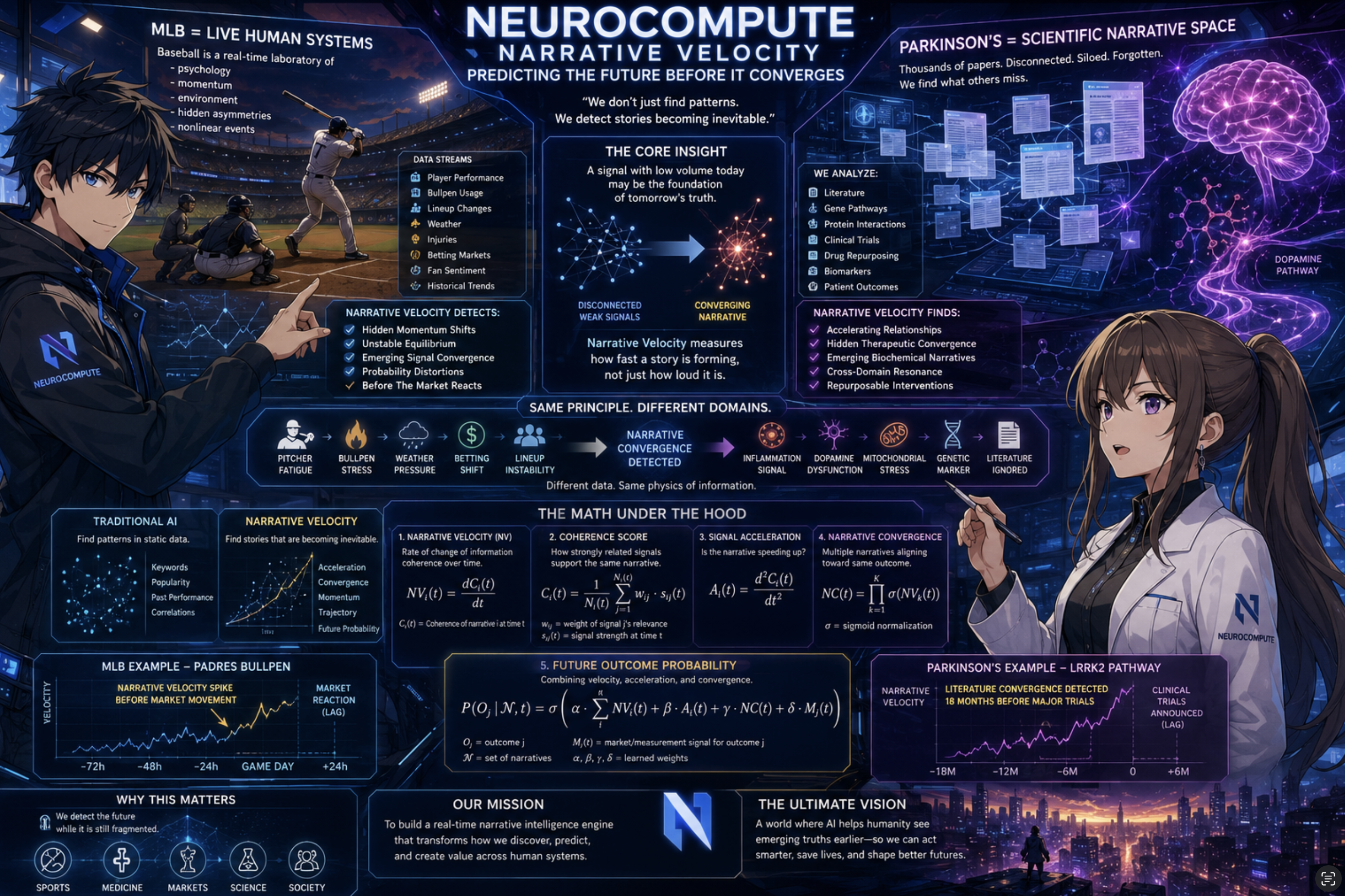
Neurocompute Parkinson’s Narrative Velocity Infographic
NEUROCOMPUTE VISUAL SYSTEM

Open the Narrative Velocity Map

Explore the full Parkinson’s research intelligence diagram.

Expand Intelligence View →
Full Neurocompute Infographic