1
Protoporphyrin IX Attenuates Liquid-Liquid Phase Separation of α-Synuclein by Inducing Its Compaction.
70.0
AI
D grade · PMID 42010890
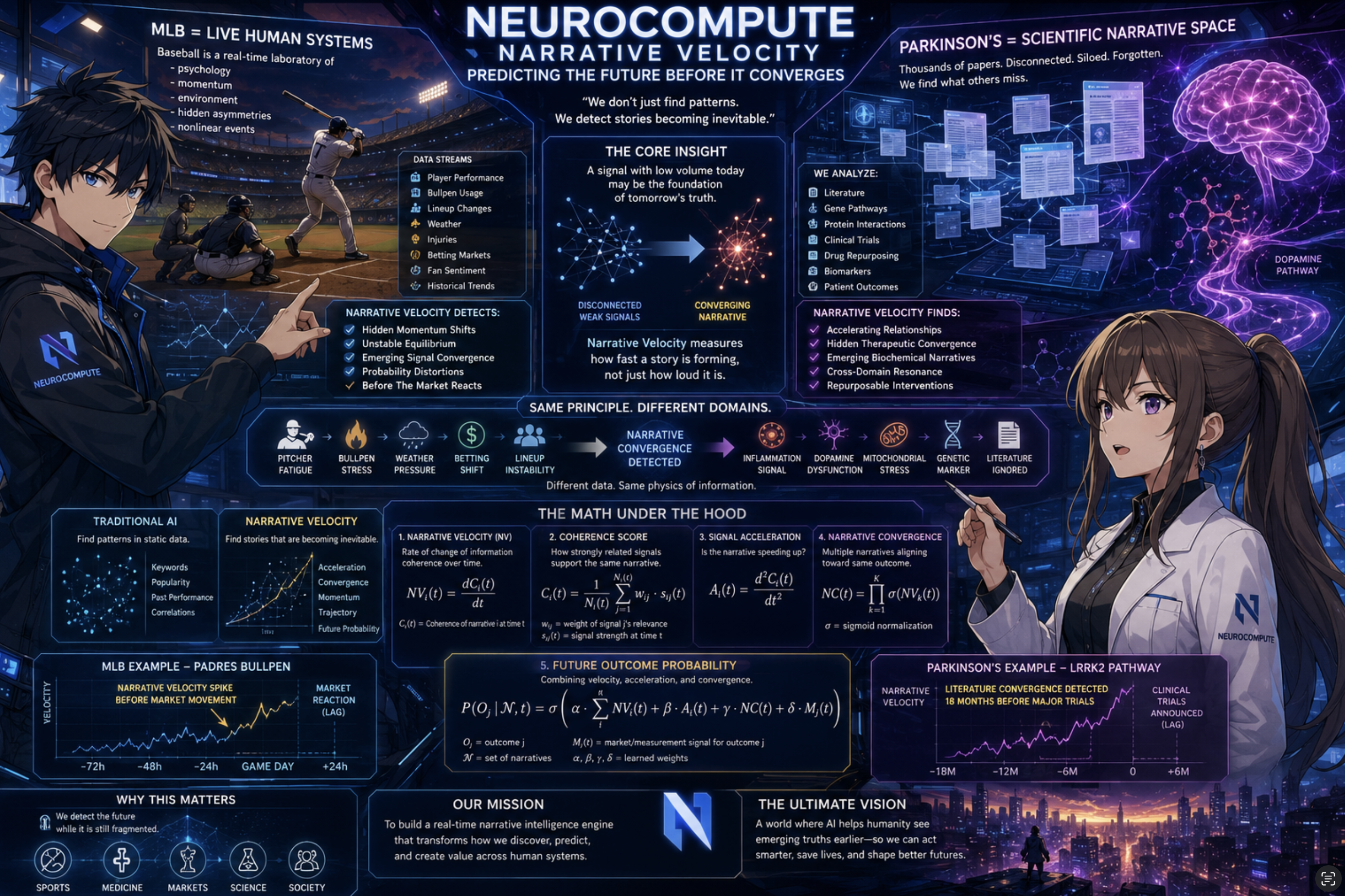
View analysis →Neurocompute scores biomedical literature, surfaces overlooked patterns, and turns Parkinson’s research into a living discovery terminal.
D grade · PMID 42010890
View analysis →D grade · PMID 42020718
View analysis →D grade · PMID 42045207
View analysis →D grade · PMID 42010118
View analysis →D grade · PMID 41955304
View analysis →D grade · PMID 41907367
View analysis →D grade · PMID 41977449
View analysis →D grade · PMID 41910646
View analysis →D grade · PMID 41898140
View analysis →D grade · PMID 42020229
View analysis →This study shows endogenous protoporphyrin IX binds α‑synuclein, induces a compact conformation that suppresses liquid–liquid phase separation and condensate formation in vitro and in cells, providing a mechanistic basis for reduced amyloidogenesis.
By identifying a small endogenous molecule that directly blocks early α‑synuclein LLPS—a process linked to fibril formation—this work provides a concrete, targetable mechanism with repurposing and drug-development potential for Parkinson's disease, though in vivo efficacy and safety remain to be…
The study integrates single-cell eQTLs with GWAS for six neuropsychiatric disorders to nominate 345 cell-type-specific risk genes—highlighting neuronal and immune/microglial contributors and examples like MAPT in astrocytes—revealing cell-resolved genetic architecture.
This provides Parkinson's drug discovery with prioritized, cell-type-resolved candidate genes (e.g., MAPT in astrocytes and immune/microglial hits) to guide target selection and mechanism-focused follow-up, although direct PD-specific functional validation and therapeutic leads are not yet provided.
In C. elegans and mammalian cells, D‑pinitol extends lifespan, preserves locomotor healthspan, reduces proteotoxicity in worm models of Parkinson’s (and other neurodegenerative) disease, and activates conserved Nrf2/SKN‑1, HSF‑1 and HLH‑30 autophagy/mitophagy pathways via p38 MAPK.
By engaging antioxidant, proteostasis and mitophagy mechanisms directly implicated in alpha‑synuclein clearance and mitochondrial dysfunction in Parkinson’s, D‑pinitol is a low‑toxicity, repurposing‑friendly candidate that merits mammalian preclinical evaluation for neuroprotective therapy…
This study identifies a reproducible gut microbiome signature that is intermediate in GBA1 non-manifesting carriers and correlates with PD progression and prodromal symptoms across multiple international cohorts, indicating microbiome shifts precede clinical Parkinson's.
It offers a validated, non-invasive biomarker to detect individuals at increased risk for PD and a plausible avenue for microbiome-targeted interventions or trial enrichment to test neuroprotective strategies in the premanifest phase.
The SLC39A8 A393T (human A391T) variant reshapes the gut microbiome and differentially alters motor deficits, dopaminergic terminal loss, and α‑synuclein pathology in two mouse synucleinopathy models—protective in a human α‑syn overexpression model but detrimental in a preformed‑fibril seeding…
This links a common PD-associated metal‑transporter SNP to microbiome shifts that correlate with disease outcomes, highlighting a potential route for genotype‑stratified microbiome biomarkers or microbiome‑targeted therapies, though causal mechanisms remain to be demonstrated.
A broad review of nanomedicine strategies for Parkinson's disease that summarizes proposed mechanisms, targeted delivery approaches, and early translational/clinical efforts but provides limited new experimental evidence.
By mapping how nanoparticle-based delivery can target PD-relevant processes (e.g., alpha‑synuclein aggregation, inflammation, mitochondrial/lysosomal dysfunction) and summarizing translational hurdles and trials, the paper helps prioritize nanotherapeutic avenues with real clinical development…
Targeted CSF metabolomics in 30 MSA, 41 PSP and 30 control subjects revealed overlapping (elevated p‑cresyl sulfate, deoxycholic acid) and disease‑specific changes (PSP: lower cortisone, higher hexosylceramide d18:1/24:1; MSA: higher dihydroxyphenylalanine, homoarginine, creatinine), disrupted…
The study delivers high‑accuracy CSF biomarker panels for differential diagnosis and points to gut‑brain and membrane lipid metabolic pathways that are actionable for patient stratification, target validation, or repurposing efforts in atypical parkinsonian and related neurodegenerative therapeutic…
Dopamine triggers dose-dependent cAMP increases and delayed L-lactate production in cultured rat cortical astrocytes via a receptor- and cAMP-dependent mechanism that is largely mediated by β1-adrenoceptors despite limited D1–β1 nanoscale colocalization.
By revealing a dopaminergic pathway that drives astrocytic glycolysis via β1-adrenergic signalling, the work highlights a novel metabolic mechanism potentially relevant to Parkinson's disease (where noradrenergic loss may impair astrocyte support) and points to astrocytic β1 signalling and lactate…
In a cross-sectional cohort of 251 Parkinson's patients, glucolipotoxicity-based insulin-resistance indices (TyG, AIP) — but not BMI-dependent measures — were associated with Parkinson's disease dementia and domain-specific cognitive deficits, and an interpretable SHAP-guided logistic regression…
Points to modifiable metabolic dysfunction (insulin resistance/glucolipotoxicity) as a clinically measurable predictor of PDD and provides an interpretable risk tool that supports metabolic-targeted therapeutic strategies, though causality is limited by cross-sectional design.
Using integrated 18F-FDG PET and DTI in 43 Parkinson's patients versus 25 controls, the study found preserved small-world topology but reduced metabolic network integration and significant regional decoupling between structural and metabolic connectivity—most prominently in orbitofrontal-basal…
By revealing network-level structural–metabolic decoupling, especially in orbitofrontal–basal ganglia circuits, the work suggests multimodal imaging biomarkers for patient stratification and for tracking or targeting circuit- and metabolism-focused interventions, though it stops short of…
Intranasal polymer/surfactant/HPβCD liquid and powder formulations of ropinirole in C57BL/6J mice markedly increased systemic and brain exposure versus oral or intranasal solution, with the powder showing the highest relative serum (≈1497%) and brain (≈541%) bioavailability.
By demonstrating substantially improved CNS delivery of an approved PD dopamine agonist, the work supports a translational route-optimization strategy to enhance symptomatic control and bypass first-pass/GI issues, though it lacks efficacy, safety, and disease‑modifying data.
Using MALDI-MSI in acute and subacute MPTP mice, the study reports time-dependent reductions of polyunsaturated phosphatidylcholines (e.g., PC 36:4, PC 38:6, PC 40:8) in motor cortex and striatum that correlate with dopaminergic neuron loss and motor deficits.
Pinpoints specific membrane lipid changes as potential PD biomarkers and implicates altered lipid metabolism/membrane integrity in disease progression, offering translational leads for biomarker development or lipid-targeted neuroprotective strategies.
This computational study reports targeted mutations in Lacticaseibacillus paracasei catechol-2,3-dioxygenase and NAD(+) reductase that, by docking and molecular dynamics, improve in silico binding of 3‑phenoxybenzoic acid (a cypermethrin metabolite) suggesting enhanced enzymatic degradation…
By highlighting a gut‑microbe–based route to degrade a pesticide metabolite linked to Parkinson’s risk, the work suggests microbiome engineering or enrichment could reduce environmental contributors to PD, though it remains purely in silico and needs biochemical and in vivo validation.
Narrative review linking chemical toxicants and air pollutants to neurodegenerative diseases, including Parkinson's, emphasizing mechanisms such as oxidative stress, protein aggregation, and mitochondrial dysfunction but providing no new data or concrete therapeutic strategies.
Valuable for hypothesis generation because it aggregates environmental exposures that converge on PD-relevant pathways (mitochondria, proteostasis), yet its broad, non-specific synthesis limits immediate translational or drug-discovery impact.
Presents an ODE-based dynamic network model with a Bayesian inference workflow to infer metabolite–microbe interaction rates from time-series data and predict community responses to perturbations.
Offers a rigorous, uncertainty-aware computational tool to quantify gut microbiome metabolic interactions and prioritize microbiota-targeted interventions relevant to the gut–brain axis in Parkinson's disease, but it lacks direct PD-specific mechanistic or clinical validation.
Systematic review and meta-analysis of six observational studies (344,580 participants) reports a modest association between PPI use and increased Parkinson's disease risk (pooled OR 1.14, 95% CI 1.07–1.22) but rates the evidence as low certainty due to heterogeneity and confounding.
While not providing mechanisms, the epidemiological signal—if validated—could point to gut-mediated, nutrient or metabolic contributors to PD and warrants prospective, mechanistic studies to assess causality and inform safer PPI use in at-risk populations.
Scoping review of 49 studies (1,388 patients) on Parkinson’s-related dysphonia found voice therapy to have the most consistent, statistically significant benefits, while other approaches (DBS, drugs, surgical) showed heterogeneous or mixed effects.
Although it does not address disease-modifying biology, the paper identifies an evidence-backed, actionable symptomatic intervention (voice therapy) that improves quality of life and underscores the need for standardized outcome metrics and studies of combined therapies in PD care.
Systematic review and meta-analysis of 16 studies found that nonpharmacological, nonsurgical interventions for Parkinson’s-related lower urinary tract symptoms modestly reduce incontinence episodes (~0.9 fewer/24 h) with uncertain effects on other LUTS due to heterogeneity and low-certainty…
Clinically useful for symptomatic management and trial design (standardized outcomes, better-powered studies) but provides little mechanistic or disease-modifying insight for Parkinson’s therapeutic discovery.
Qualitative focus groups with people with Parkinson's disease and multiple sclerosis and their caregivers identified cognitive and physical barriers to grocery shopping and cooking, reliance on caregiver support, interest in assistive devices and compensatory strategies, and yielded eight…
While not providing mechanistic or drug-discovery insights, the study is valuable for developing supportive nutritional and caregiving interventions that could improve quality of life, adherence to treatments, and reduce caregiver burden—important clinical considerations but of limited direct…
Analysis of 54,296 German adults aged 60–74 found high rates of potentially inappropriate medication (26.1%), medication underuse (19.1%) and overuse (23.6%), with Parkinson's disease strongly associated with both PIM and underuse.
While not identifying therapeutic targets, the paper flags that people with Parkinson's are at elevated risk of inappropriate or missing treatments, indicating a need for targeted medication reviews to improve safety and optimize care in PD cohorts and clinical studies.