AI-POWERED RESEARCH INTELLIGENCE

Finding therapies hidden in 1,516 Parkinson’s papers.

Neurocompute scores biomedical literature, surfaces overlooked patterns, and turns Parkinson’s research into a living discovery terminal.

1,516Papers indexed
984Papers AI scored
998Ranked papers
0.7%Coverage
LIVE RESEARCH INTELLIGENCE
↑ Narrative velocity rising ↑ New papers ingested ↑ Cross-paper convergence detected ↑ AI score dials updating ↑ Research blind spots surfacing
TOP SIGNALS TODAY

Ranked discovery teasers

View all discoveries →
RESEARCH TERMINAL

All ranked Parkinson’s papers

1516 results
D
Dopamine D2 Receptor Isoform Heteroreceptor Complexes with the Growth Hormone Secretagogue Receptor 1a Reveals Isoform-Specific Interaction Interface Dynamics.
PMID 41902748 Published: 2026-04-13 Ingested: 2026-04-28 08:58 PM Journal of chemical information and modeling
AI58.0
Base44.5
Rank42.3
AI Summary

Computational modeling and coarse-grained molecular dynamics show distinct structural dynamics and isoform-specific interaction interfaces for D2R short vs long isoforms in heteromers with GHSR1a, predicting differential effects on ligand binding and allosteric regulation.

Why It Matters

By identifying isoform-dependent interfaces and predicted allosteric modulation within D2R/GHSR1a heteromers, the study provides a mechanistic framework that could be exploited to design heteromer- or isoform-selective therapeutics for Parkinson's disease, though experimental validation is required.

D
Associations of Monocyte Glucocerebrosidase with Cognition and Cholinergic Innervation in GBA1 Parkinson's Disease.
PMID 41969198 Published: 2026-04-13 Ingested: 2026-04-28 08:58 PM Movement disorders : official journal of the Movement Disorder Society
AI55.0
Base44.5
Rank42.3
AI Summary

This study found monocyte GCase activity is lower in GBA1-PD versus non-GBA PD but that peripheral monocytic GCase does not correlate with cognition or regional cholinergic PET measures in early-stage PD.

Why It Matters

It shows peripheral monocyte GCase reflects GBA1 genotype but is unlikely to be a useful peripheral biomarker of cognitive decline or central cholinergic dysfunction, steering therapeutic biomarker efforts toward central measures or alternative targets for GCase-modulating interventions.

D
Next-Gen Olfactometry System for Olfactory Testing in Parkinson's Disease and High-Risk Individuals.
PMID 41937681 Published: 2026-04-06 Ingested: 2026-04-28 08:58 PM Movement disorders clinical practice
AI55.0
Base44.5
Rank42.3
AI Summary

The study validates a rapid, semi-automated Next‑gen Olfactometry System (NOS) that shows moderate agreement with the standard OSIT‑J test, discriminates PD from high- and low-risk groups, and in exploratory analysis correlates with DAT SPECT in high‑risk individuals.

Why It Matters

NOS offers a practical, scalable olfactory screening method to identify prodromal PD and enrich cohorts for early‑intervention trials and biomarker studies, aiding translational research and trial recruitment even though it does not report new mechanistic or therapeutic interventions.

D
Life Cycle and Circadian Rhythms in Central Resident Immunity and Neuropsychiatric Pathology.
PMID 41942685 Published: 2026-04-06 Ingested: 2026-04-28 08:58 PM Neuroscience bulletin
AI55.0
Base42.7
Rank42.3
AI Summary

This systematic review synthesizes how the life cycles and circadian rhythms of central immune (glial) cells affect functions like phagocytosis, immune clearance, neurogenesis, neurotransmitter recycling, and how these rhythmic processes relate to neuropsychiatric and neurodegenerative diseases…

Why It Matters

It highlights glial circadian regulation of neuroinflammation, oxidative stress, and sleep-related processes that are relevant to Parkinson's therapeutic timing and glia-targeted strategies, but remains a broad review with limited direct, actionable targets for immediate drug discovery.

D
Rethinking Neuroregenerative Microenvironments: Synergy Between Bioengineering and Organoids.
PMID 41923533 Published: 2026-04-02 Ingested: 2026-04-28 08:58 PM Advanced healthcare materials
AI46.0
Base42.7
Rank42.3
AI Summary

Review of biomaterial- and organoid-based bioengineering strategies (injectable ECM-mimetic hydrogels, 3D bioprinting, nerve guidance conduits, and vascularized organoids) to recreate permissive neuroregenerative microenvironments for CNS repair and neural circuit reconstruction.

Why It Matters

Relevant to Parkinson's for its focus on improving graft survival, modulating neuroinflammation/oxidative stress, and enabling organoid-based cell-replacement or disease-modeling approaches, but it is a conceptual review with limited actionable molecular targets or immediate therapeutic leads.

D
Neurodevelopmental Disorder with Dystonia and Chorea Linked to De Novo Variants in the Splicing Regulator SRRM4.
PMID 41958152 Published: 2026-04-09 Ingested: 2026-04-28 08:58 PM Movement disorders : official journal of the Movement Disorder Society
AI40.0
Base44.5
Rank42.3
AI Summary

This study links de novo splice-donor variants in the neural splicing regulator SRRM4 to infantile dystonia–chorea syndromes and demonstrates variant-specific SRRM4 mRNA isoforms and downstream microexon mis-splicing (e.g., AP1S2) in patient cells.

Why It Matters

It highlights misregulated neuronal microexon splicing as a disease mechanism that could be targeted by splice-modulating therapies and may reveal mechanistic convergence across genetic movement disorders, though it has limited direct relevance to canonical Parkinson's disease pathways like…

D
Long-Term Outcomes of Deep Brain Stimulation in Woodhouse-Sakati Syndrome.
PMID 41902420 Published: 2026-03-28 Ingested: 2026-04-28 08:58 PM Movement disorders : official journal of the Movement Disorder Society
AI28.0
Base44.5
Rank42.3
AI Summary

A retrospective series of five genetically confirmed Woodhouse-Sakati syndrome patients found bilateral GPi deep brain stimulation produced a mean ~39% improvement in Burke‑Fahn‑Marsden Dystonia Rating Scale scores at 12 months.

Why It Matters

Although it offers little mechanistic insight for Parkinson's drug discovery, the study reinforces the clinical efficacy of GPi neuromodulation in severe genetic dystonia and supports the translational relevance of basal ganglia DBS approaches across movement disorders.

D
Agitation Severity and Psychotropic Prescription in Acute Patients With Delirium Superimposed on Dementia.
PMID 42047479 Published: 2026-05-01 Ingested: 2026-04-28 08:58 PM Psychogeriatrics : the official journal of the Japanese Psychogeriatric Society
AI25.0
Base44.5
Rank42.3
AI Summary

In 1,709 acute geriatric inpatients, delirium superimposed on dementia (DSD) was linked to higher agitation (mean PAS 5.3 vs 4.0), worse functional status, more falls, and greater psychotropic exposure, with haloperidol, quetiapine, lorazepam and alprazolam independently associated with higher…

Why It Matters

While offering little in terms of PD-targeted mechanisms or therapeutic discovery, the study is clinically relevant because reduced antipsychotic use in patients with parkinsonism and the high psychotropic burden in DSD underscore medication-safety and symptom-management issues—and the need to…

D
Modulation of biomolecular condensation of alpha-synuclein variants by eprodisate.
PMID 42045548 Published: 2026-04-27 Ingested: 2026-04-28 08:58 PM Communications chemistry
AI70.0
Base44.0
Rank41.9
AI Summary

The study demonstrates that eprodisate, a glycosaminoglycan mimetic, disrupts α‑synuclein liquid–liquid phase separation, increases droplet fluidity, inhibits hydrogel and amyloid formation of several PD-relevant α‑syn variants, reduces oxidative stress and α‑syn–positive aggregates, and improves…

Why It Matters

This identifies a repurposing-ready compound that targets a mechanistically novel, upstream process (biomolecular condensation/LLPS) to prevent α‑syn aggregation, giving a tangible translational lead for PD therapy development pending in vivo efficacy and safety studies.

D
Instrumental assessment of movement series reflects scored improvement of patients with Parkinson's disease.
PMID 41990556 Published: 2026-04-12 Ingested: 2026-04-28 08:58 PM Journal of the neurological sciences
AI36.0
Base44.0
Rank41.9
AI Summary

In 271 Parkinson's patients, standardized instrumental movement tests and clinical rating scales improved after multidisciplinary complex in‑patient therapy, with high correlation between subjective and objective assessments.

Why It Matters

The study provides objective evidence that multidisciplinary in‑patient care improves motor outcomes and supports using instrumental measures for monitoring and payer justification, but it offers limited mechanistic insight or direct leads for therapeutic discovery.

D
Lentinan-Enhanced Mn3O4 Nanoparticles for Neuroinflammation Relief and Parkinson's Disease Treatment.
PMID 42015685 Published: 2026-04-22 Ingested: 2026-04-28 08:58 PM Small (Weinheim an der Bergstrasse, Germany)
AI68.0
Base43.6
Rank41.6
AI Summary

Preclinical study showing lentinan-coated Mn3O4 nanoparticles (Mn3O4@LNT) alter protein corona to enhance BBB penetration, scavenge ROS, shift microglial phenotype, and reduce behavioral and pathological features in PD models.

Why It Matters

Provides mechanistic and translationally relevant evidence that a nanoparticle combining enhanced brain delivery with ROS elimination and anti-neuroinflammatory effects can ameliorate PD phenotypes, highlighting a promising therapeutic strategy while raising important safety and manganese-toxicity…

D
Machine Learning Identifies TRAPPC13/COPS5 as Biomarkers and Vesicle Transport Subtypes in Parkinson's Disease.
PMID 41972297 Published: 2026-04-13 Ingested: 2026-04-28 08:58 PM The Canadian journal of neurological sciences. Le journal canadien des sciences neurologiques
AI62.0
Base43.6
Rank41.6
AI Summary

Machine-learning analysis of public PD transcriptomes identifies TRAPPC13 and COPS5 as vesicle-transport-related diagnostic biomarkers and defines two molecular PD subtypes with distinct immune signatures.

Why It Matters

By linking vesicle trafficking and immune alterations to specific, druggable-sounding genes (TRAPPC13, COPS5) this study highlights mechanistic hypotheses and patient stratification axes useful for therapeutic target prioritization and follow-up functional validation, though its translational…

D
Disease duration-dependent alteration of regulatory natural killer cells in patients with Parkinson's disease.
PMID 42035741 Published: 2026-04-22 Ingested: 2026-04-28 08:58 PM Parkinsonism & related disorders
AI52.0
Base43.6
Rank41.6
AI Summary

In 40 PD patients, regulatory NK cells (CD56+CD16-) showed a significant, disease-duration-dependent decline in CD56 expression (lower MFI) without changes in subset proportions or correlations with UPDRS or dopaminergic dose.

Why It Matters

This provides a peripheral, inflammation-related biomarker candidate reflecting impaired immunoregulatory capacity in advanced PD that could help stage disease or stratify patients for immune-modulatory approaches, albeit requiring validation and mechanistic follow-up.

D
AI45.0
Base43.6
Rank41.6
AI Summary

Intranasal VEEV infection in mice produces acute neuroinflammation, persistent hippocampal neuron loss, chronic glial activation, and long-term motor and cognitive deficits with single-cell transcriptomic changes in synaptogenic and immune pathways up to 106 days post-infection.

Why It Matters

Moderately relevant to Parkinson's research because it models how viral-triggered chronic neuroinflammation and neuron loss can drive lasting behavioral deficits and could be used to test anti-inflammatory or neuroprotective strategies, but it lacks PD-specific mechanisms (e.g., alpha-synuclein,…

AI Summary

In a mouse dual-hit model, juvenile manganese exposure increased pyknotic neurons and induced pro-inflammatory microglial morphological changes in the hippocampus following adult H1N1 infection.

Why It Matters

The work links environmental manganese and viral infection to heightened hippocampal neuroinflammation relevant to PD-related cognitive decline, supporting inflammation as a potential intervention axis even though it lacks direct PD-specific mechanisms or therapeutic candidates.

D
Case Report: Hyperthyroidism induced liver failure with Wolff-Parkinson-White syndrome.
PMID 41970404 Published: 2026-01-01 Ingested: 2026-04-28 08:58 PM Frontiers in medicine
AI5.0
Base43.6
Rank41.6
AI Summary

Case report of a 53-year-old man with hyperthyroidism-induced acute liver failure complicated by Wolff-Parkinson-White syndrome and pneumonia who recovered after antithyroid therapy, plasma exchange, radiofrequency catheter ablation, and supportive care.

Why It Matters

This paper has minimal direct relevance to Parkinson's therapeutic discovery but highlights the need for accurate systemic diagnosis and multidisciplinary management of complex comorbidities, a tangential consideration for patient selection and safety in neurodegeneration clinical research.

D
Temporal assessment of behavior in Parkinson's visual hallucinations via a multidimensional analysis strategy.
PMID 42020358 Published: 2026-04-22 Ingested: 2026-04-28 08:58 PM Signal transduction and targeted therapy
AI62.0
Base43.2
Rank41.2
AI Summary

This study presents a benzhexol-induced mouse model of Parkinson's disease visual hallucinations and a multidimensional behavioral analysis that defines a 'hallucination-related hunching state' (HHS) and behavior transition maps for high-throughput, temporal detection of hallucinatory episodes.

Why It Matters

By delivering a quantifiable, scalable preclinical model and objective behavioral readouts, the work enables circuit-level mechanistic studies and screening of interventions for PD visual hallucinations, increasing translational potential despite limited immediate molecular targets.

D
Linking executive dysfunction to gait initiation deficits in Parkinson's disease with freezing of gait.
PMID 41950606 Published: 2026-04-05 Ingested: 2026-04-28 08:58 PM Parkinsonism & related disorders
AI45.0
Base43.2
Rank41.2
AI Summary

This clinical study shows that impaired inhibition and slowed cognitive flexibility are associated with prolonged anticipatory postural adjustment (APA) duration during gait initiation in Parkinson's patients with freezing of gait, identifying APA duration as a potential biomechanical marker.

Why It Matters

While not revealing molecular targets, the work highlights a measurable biomechanical biomarker (APA duration) and supports therapeutic strategies aimed at improving postural preparation and executive control (e.g., targeted rehabilitation or neuromodulation) to reduce freezing episodes.

D
Electric Field Directed Structural Modulation and Nanoassembly of Peptide Hydrogels.
PMID 41941211 Published: 2026-04-21 Ingested: 2026-04-28 08:58 PM Langmuir : the ACS journal of surfaces and colloids
AI35.0
Base43.2
Rank41.2
AI Summary

The authors demonstrate that external electric fields can noninvasively alter the nanoscale supramolecular assembly, solubility, mechanical properties, and conductivity of designed short tripeptide hydrogels without changing peptide secondary structure.

Why It Matters

Modulating peptide aggregation with electric fields is an intriguing, nonchemical approach that could conceivably be applied to reduce amyloid-like fibrillation (e.g., alpha-synuclein) relevant to Parkinson's, but this study uses artificial short peptides and lacks disease‑relevant proteins,…

D
Income, employment, and clinical outcomes in Parkinson's disease.
PMID 42005966 Published: 2026-01-01 Ingested: 2026-04-28 08:58 PM Clinical parkinsonism & related disorders
AI18.0
Base43.2
Rank41.2
AI Summary

In a large online cohort (n≈29,800) the authors report that unemployment/retirement and lower household income are associated with worse motor severity, greater depressive symptoms, and poorer quality of life in Parkinson's disease, while income was not linked to self-reported cognitive complaints.

Why It Matters

Although it offers little direct mechanistic or druggable insight, the study highlights socioeconomic factors as important confounders for clinical outcomes, trial design, patient stratification, and non-pharmacologic interventions that can influence therapeutic development and access.

Previous
Page 23 of 76
Next
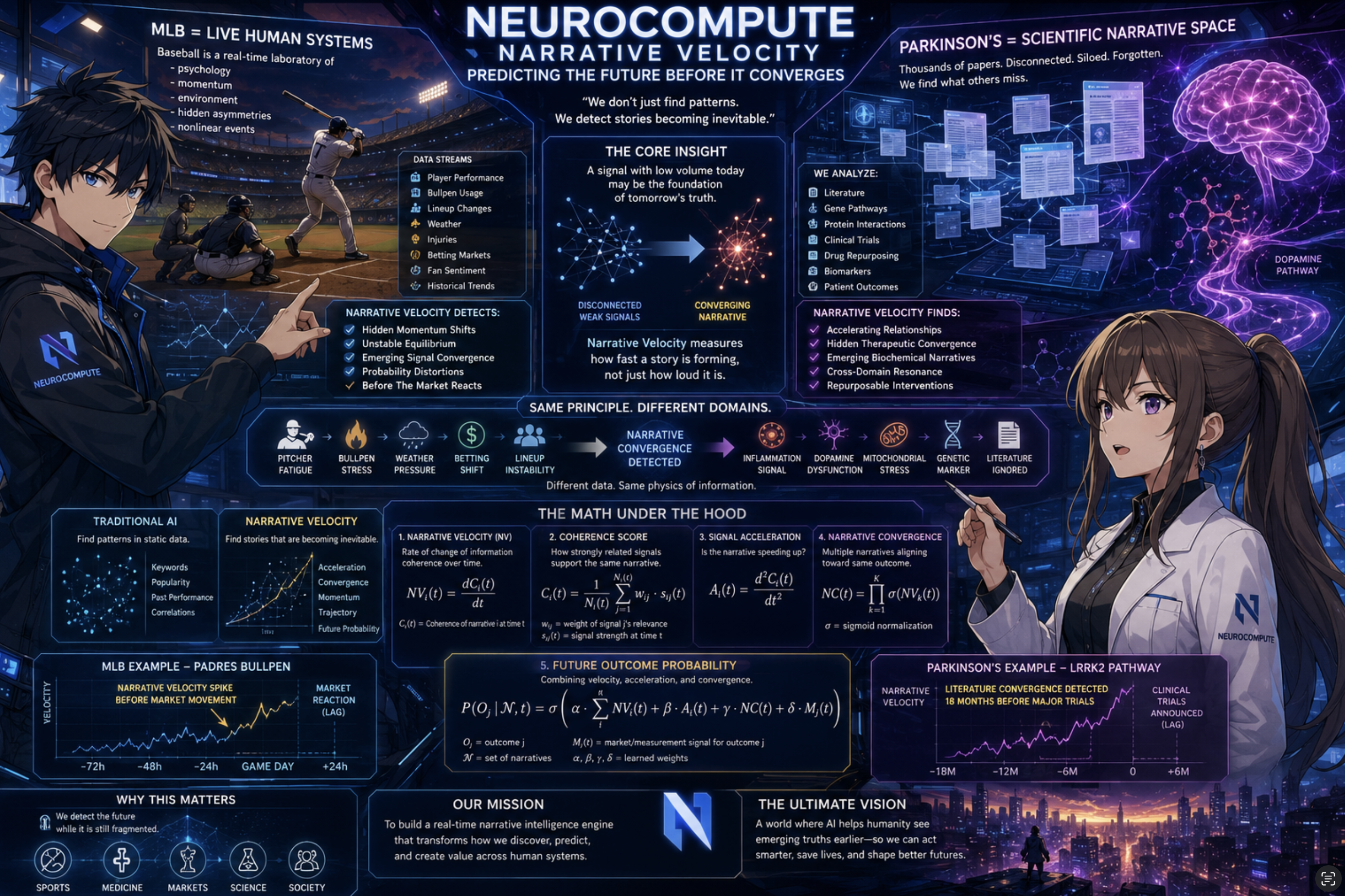
Neurocompute Parkinson’s Narrative Velocity Infographic
NEUROCOMPUTE VISUAL SYSTEM

Open the Narrative Velocity Map

Explore the full Parkinson’s research intelligence diagram.

Expand Intelligence View →
Full Neurocompute Infographic